Cybersecurity is no longer just an enterprise concern. Small and mid-sized businesses (SMEs) are increasingly becoming prime targets for cyberattacks—often because they operate with limited visibility, fewer controls, and tighter budgets.
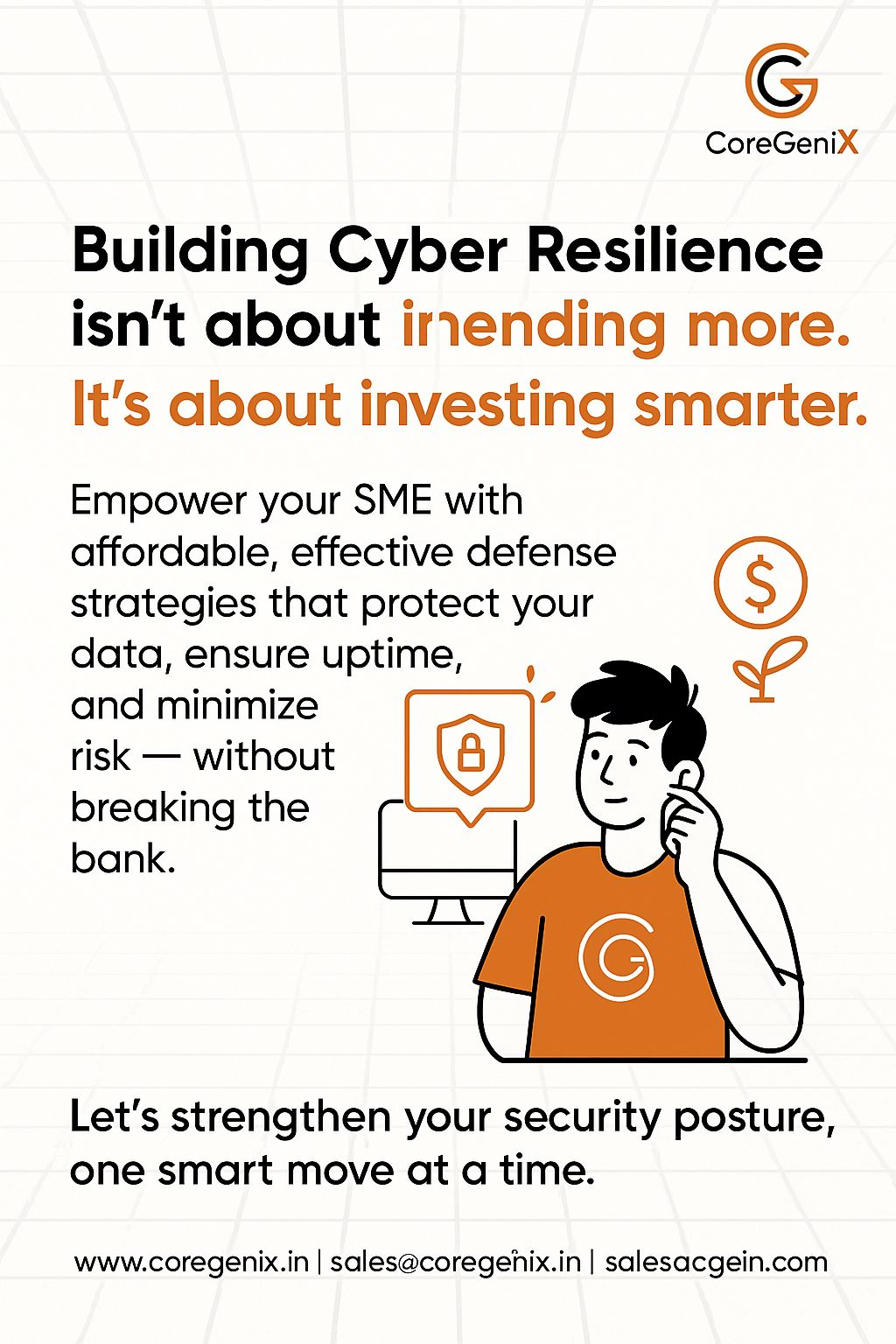
The good news? Building cyber resilience does not mean spending more. It means investing smarter.
Why SMEs Are at Higher Cyber Risk
Many SMEs believe they are “too small to be targeted.” In reality, attackers often prefer smaller organisations because:
- Security controls are inconsistent or outdated
- Monitoring is limited or nonexistent
- Backups and recovery plans are untested
- Employees lack regular security awareness training
Cyber resilience is not about expensive tools—it’s about clarity, prioritisation, and continuity planning.
Cost-Effective Ways SMEs Can Build Cyber Resilience
1. Start With What You Already Have
Before buying new tools, review your existing environment:
- Patch known vulnerabilities
- Remove unused user accounts
- Enforce least-privilege access
Many breaches occur due to misconfigurations—not missing technology.
2. Automate the Basics
Automation delivers the highest return on investment for SMEs.
Focus on affordable or built-in automation for:
- Operating system and application patching
- Endpoint protection and health checks
- Backup scheduling and verification
Automation reduces human error and improves response time without increasing headcount.
3. Leverage Open-Source Security Tools
Open-source solutions can provide enterprise-grade protection when implemented correctly.
Popular options include:
- Centralised log monitoring and SIEM platforms
- Network intrusion detection systems
- Vulnerability scanning tools
These tools eliminate licensing costs while improving visibility and detection capabilities.
4. Invest in People, Not Just Technology
Human error is still one of the leading causes of security incidents.
Cost-effective awareness initiatives include:
- Regular phishing simulations
- Short, role-based security training sessions
- Clear incident reporting processes
Security awareness delivers one of the highest ROI outcomes for SMEs.
5. Plan for Recovery, Not Just Prevention
No security setup is breach-proof. What matters most is how quickly you can recover.
Even a simple recovery plan should include:
- Validated backups
- Clear recovery responsibilities
- Defined recovery time objectives (RTOs)
Preparedness can mean the difference between hours of downtime and permanent business loss.
Cyber Resilience Is About Smart Investment
Resilience isn’t measured by how much you spend—it’s measured by how quickly you can detect, respond, and recover.
For SMEs, every rupee invested should:
- Reduce detection time
- Improve response speed
- Minimise operational disruption
How CoreGenix Supports SMEs
At :contentReference[oaicite:1]{index=1}, we help SMEs design affordable, scalable cybersecurity strategies that protect data, ensure uptime, and minimise risk.
Our approach focuses on:
- Security consolidation for better visibility
- Automation-driven protection
- Real-world risk assessments
- Practical recovery and continuity planning
Cyber resilience is built one smart decision at a time.
Final Thought
Cybersecurity doesn’t need to break the bank to protect your business.
It needs focus, discipline, and the right strategy.
Let’s strengthen your security posture—cost-effectively and sustainably.