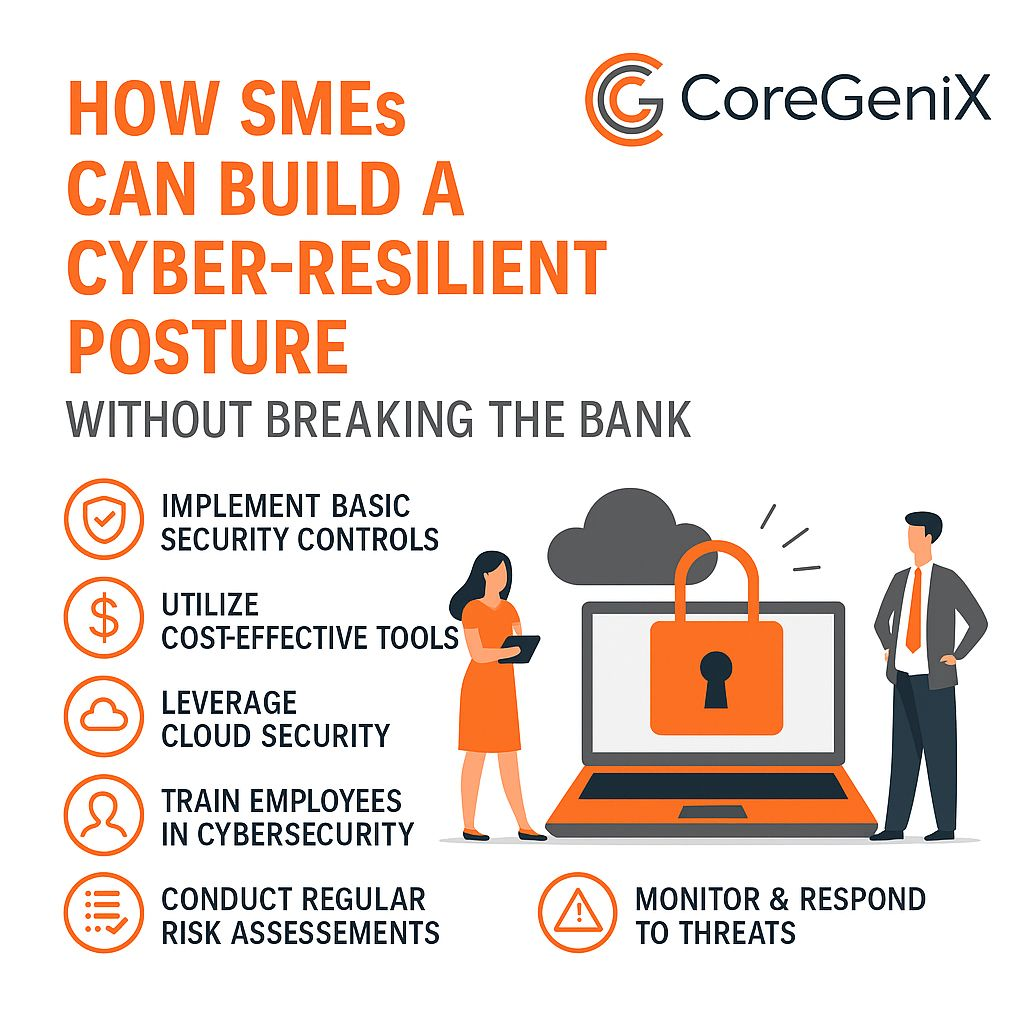
Many small and mid-sized enterprises (SMEs) believe that cybersecurity requires enterprise-grade budgets, complex frameworks, and expensive tools. In reality, most cyber incidents in SME environments don’t happen due to a lack of technology—they happen because of limited visibility, poor prioritisation, and weak continuity planning.
Cyber resilience isn’t built on budget. It’s built on clarity, consistency, and culture.
The Real Cybersecurity Challenges SMEs Face
Across industries, we see similar patterns in real SME environments:
- A manufacturing firm using multiple cloud tools with no central monitoring—one compromised email led to a week-long outage.
- A logistics company invested heavily in firewalls but never validated backups—ransomware encrypted shared drives and recovery failed.
- An accounting firm believed it was “too small to be a target”—until a phishing email exfiltrated sensitive client data.
These incidents were not caused by missing tools, but by missing fundamentals.
Why Cyber Resilience Matters More Than Expensive Security
For SMEs, resilience is about how quickly you can:
- Detect an incident
- Respond effectively
- Recover operations
Every rupee spent should directly reduce the time to detect, respond, or recover. Anything else adds cost without reducing risk.
A Practical, Cost-Conscious Cyber Resilience Approach for SMEs
At CoreGenix, our approach to SME cybersecurity focuses on practical outcomes—not oversized security stacks.
1. Implement Basic Security Controls
Strong fundamentals go a long way. This includes secure access, patching, endpoint protection, and basic identity controls that address the most common attack vectors.
2. Consolidate for Better Visibility
More tools don’t mean more security. We help SMEs reduce tool sprawl and create central visibility across cloud, endpoints, and networks.
3. Leverage Cloud Security Smartly
Cloud platforms offer built-in security capabilities. When configured correctly, they provide scalable protection without additional infrastructure costs.
4. Automate Wherever Possible
Automation reduces human error and operational overhead. Daily patching, log monitoring, and response workflows help SMEs stay protected with limited resources.
5. Train Employees in Cyber Awareness
People remain the most targeted attack surface. Regular training helps employees recognise phishing attempts and reduce avoidable incidents.
6. Conduct Regular Risk Assessments & Simulations
Breach simulations and risk assessments expose real weaknesses—not just compliance gaps—allowing SMEs to prioritise fixes that matter.
7. Monitor and Respond Continuously
Continuous monitoring ensures threats are detected early and handled before they escalate into major disruptions.
Smart Defence Beats Expensive Defence
Cyber resilience for SMEs is not about buying the most expensive tools—it’s about making smarter decisions.
By consolidating tools, automating processes, and focusing on visibility and response, SMEs can dramatically reduce cyber risk without overspending.
Building Resilience That Scales With Your Business
As SMEs grow, so do their attack surfaces. A resilient foundation today ensures future growth doesn’t introduce unmanaged risk.
Ready to move from reactive security to measurable resilience?
CoreGenix helps SMEs build cyber resilience that protects operations, customers, and growth—without enterprise-sized budgets.