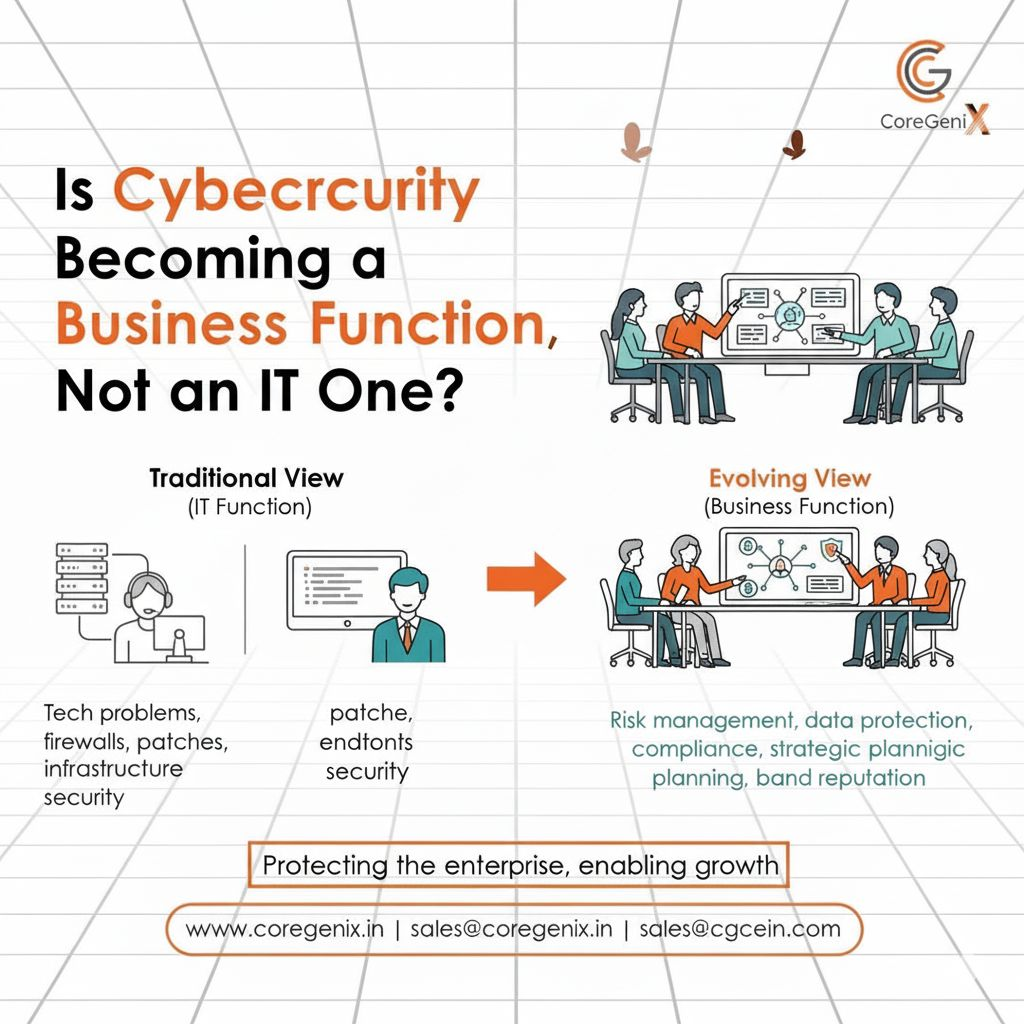
Not long ago, cybersecurity lived quietly inside the IT department—focused on firewalls, patches, and passwords. Today, it has moved into the boardroom.
Why? Because every modern organisation runs on data, and data equals trust. A single breach can erode brand reputation, investor confidence, and customer loyalty faster than almost any operational failure.
Cybersecurity is no longer just about protecting systems. It’s about protecting the business.
The Shift: From IT Function to Business Function
Traditional cybersecurity was reactive and technical. The modern approach is proactive, strategic, and business-driven.
Organisations are moving from asking:
- “Are our systems patched?”
- “Is our firewall configured?”
To asking:
- “Are we secure enough to grow?”
- “How does cyber risk impact revenue, compliance, and trust?”
How Forward-Thinking Leaders Are Adapting
1. Bringing CISOs Into the Boardroom
Cyber risk is now business risk. Leading organisations involve CISOs and security leaders in:
- Budgeting and investment decisions
- Mergers and acquisitions
- New product and market launches
This ensures security decisions align with long-term business objectives.
2. Mapping Cybersecurity to Business Outcomes
Executives are no longer satisfied with technical metrics alone.
Today’s board-level questions include:
- How does security improve uptime and availability?
- How does it support regulatory compliance?
- How quickly can we respond to incidents?
KPIs like Mean Time to Respond (MTTR) and incident cost per hour saved are now business metrics—not just IT metrics.
3. Building a Security-First Culture
Technology alone cannot stop breaches. People remain one of the most targeted attack surfaces.
Modern organisations invest in:
- Phishing simulations
- Role-based security awareness training
- Regular access reviews
Resilience starts with behaviour, not software.
4. Balancing Innovation with Control
Security should not slow down innovation—it should enable it.
Forward-thinking leaders align cybersecurity teams with:
- DevOps
- Legal and compliance
- Product and business teams
This ensures innovation is secure by design, not secured after deployment.
Why Cybersecurity Is Now a Growth Enabler
Strong cybersecurity enables organisations to:
- Enter new markets with confidence
- Protect brand reputation and customer trust
- Meet regulatory and compliance requirements
- Scale digital operations securely
Today, leaders no longer ask, “Is our network secure?”
They ask, “Is our business secure to scale?”
How CoreGenix Helps Turn Cybersecurity Into Strategy
At CoreGenix, we help organisations make the shift from reactive security to strategic cyber resilience.
Our Cybersecurity Consulting and Virtual CISO (vCISO) services help businesses:
- Build governance and compliance frameworks
- Develop risk-based security roadmaps
- Establish continuous monitoring and incident response programs
- Embed cybersecurity into day-to-day business decision-making
The result is cybersecurity that supports growth instead of blocking it.
Cybersecurity Is Everyone’s Business
Cybersecurity is no longer owned by IT alone. It’s shared across leadership, operations, and every employee.
Ready to transform cybersecurity into a business advantage?
Let CoreGenix help you build digital trust, resilience, and secure growth.