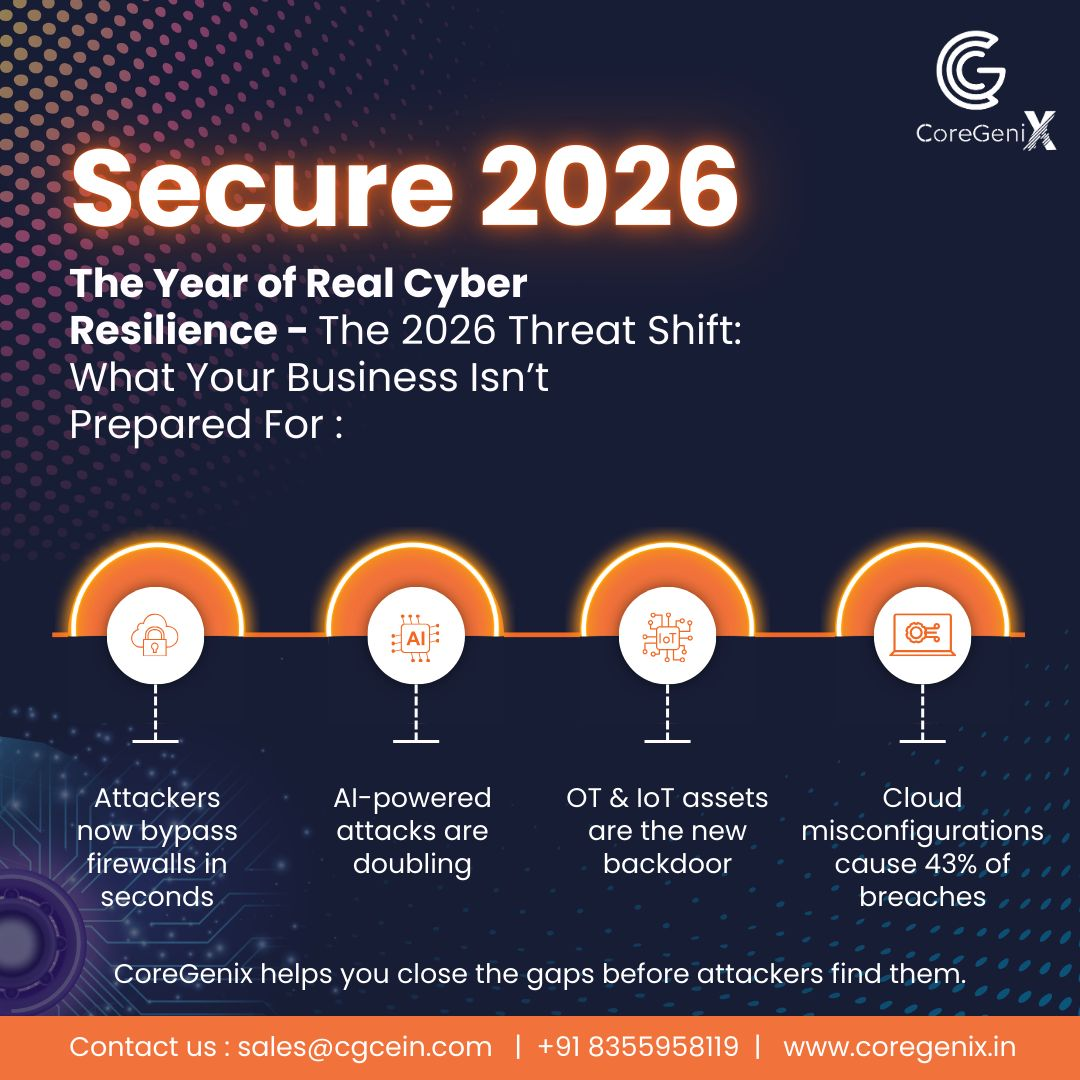
2026 brings a new wave of cyber risks—and most organisations are not fully prepared. The threat landscape has shifted beyond traditional perimeter security, exposing gaps that attackers exploit in seconds.
From AI-powered attacks to insecure OT, IoT, and cloud environments, modern enterprises face threats that demand a stronger, more resilient cybersecurity approach.
The 2026 Threat Shift: What Businesses Aren’t Prepared For
Cyber threats in 2026 are faster, smarter, and harder to detect. Traditional defences alone are no longer sufficient to protect critical business systems.
Attackers Now Bypass Firewalls in Seconds
Perimeter-based security is no longer enough. Attackers exploit misconfigurations, stolen credentials, and zero-day vulnerabilities to move past firewalls almost instantly.
AI-Powered Attacks Are Accelerating
Adversaries are using AI to automate phishing, malware, and evasion techniques—making attacks more frequent, targeted, and difficult to identify.
OT & IoT Assets Are the New Backdoor
Operational Technology and IoT devices often lack proper visibility and security controls, turning them into silent entry points for attackers.
Cloud Misconfigurations Drive Nearly Half of Breaches
Poorly configured cloud environments remain one of the leading causes of data breaches, exposing sensitive systems and information.
Why Cyber Resilience Matters More Than Ever
Cyber resilience goes beyond prevention. It focuses on the ability to detect threats early, respond quickly, and recover with minimal business impact.
Organisations that prioritise cyber resilience are better equipped to:
- Reduce downtime and operational disruption
- Limit the impact of breaches and attacks
- Protect revenue, reputation, and customer trust
- Adapt to evolving threat landscapes
How CoreGenix Helps Secure 2026
At CoreGenix, we help organisations identify emerging security gaps early and build real cyber resilience through a layered, proactive approach.
- Zero Trust-aligned security architectures
- Continuous threat detection and monitoring
- Protection across IT, OT, IoT, and cloud environments
- 24×7 SOC monitoring and rapid incident response
- Security assessments to uncover hidden vulnerabilities
Our approach ensures that security controls work together to detect, contain, and respond to threats before they escalate.
Secure 2026 Before Attackers Find the Gaps
Cybersecurity in 2026 is not about reacting to incidents—it’s about anticipating threats and building resilience into every layer of your environment.
Secure 2026 now.
Let CoreGenix help you close the gaps before attackers find them.